

How We Test Dog Crates
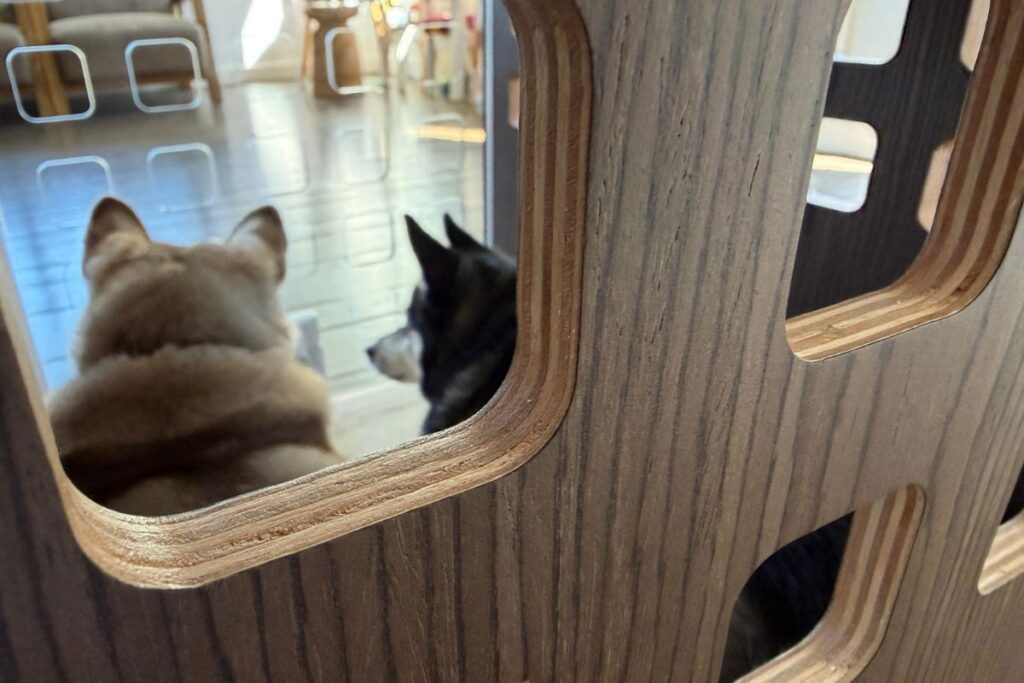
We test dog crates using our Alaskan Klee Kai dogs, and evaluate them based on real-world use in a home environment.
Our goal is to assess how crates perform for everyday dog owners, not just how they look on a product page.
Whenever possible, crates are tested with our Alaskan Klee Kai, Copper and Skye, who have very different personalities and behaviors. This helps us evaluate how crates perform across different temperaments.
The Criteria We Use To Test Crates
1. Build Quality & Durability
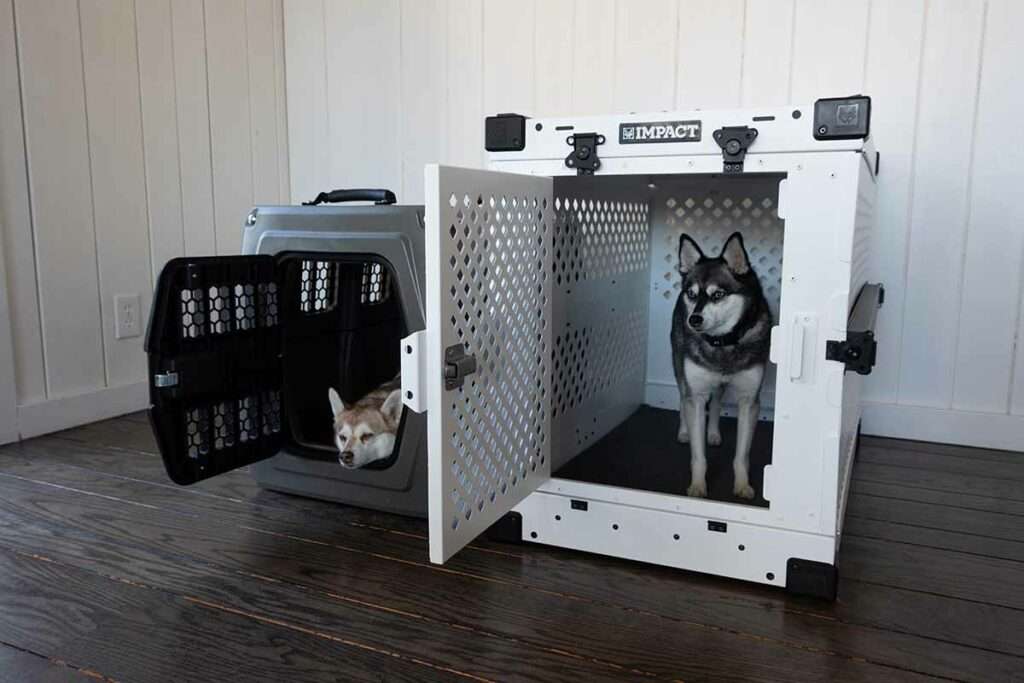
We examine the overall construction of the crate, including:
• Structural integrity
• Materials used
• Door and locking mechanisms
• Ventilation
• Transportability
We also assess whether the crate feels secure enough for dogs that may paw, scratch, or push against the sides.
2. Safety Features
Safety is critical when choosing a crate.
We check for:
• Secure door latches
• Smooth welds or edges
• Adequate spacing between bars or panels
• Proper ventilation
• Stability when the dog moves inside
Crates that could potentially pinch paws, bend easily, or open accidentally receive lower scores.
3. Comfort & Usability
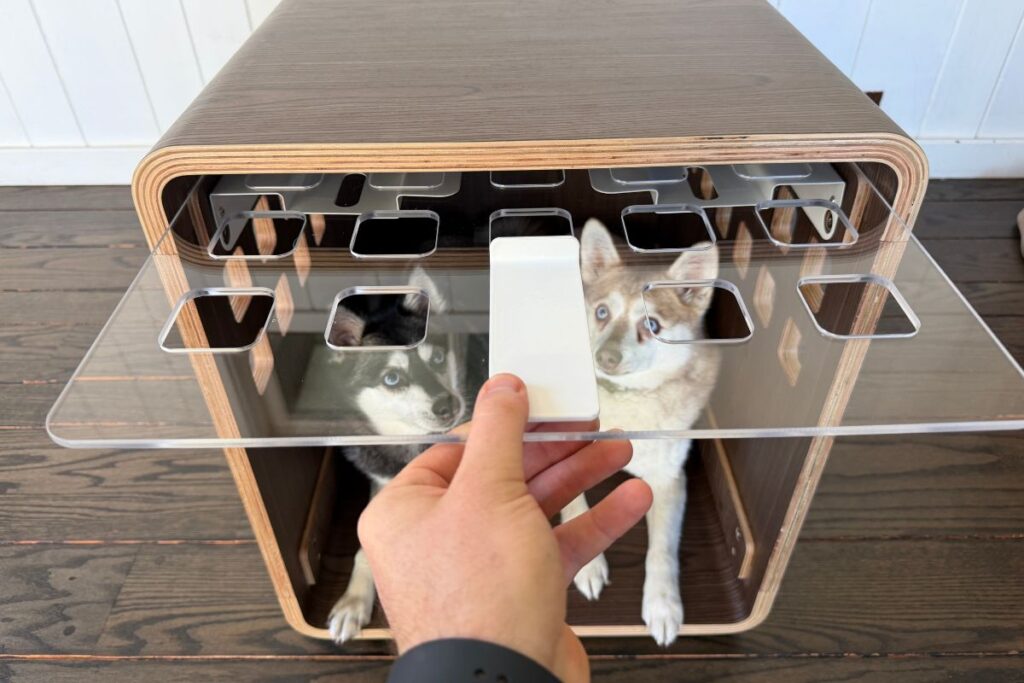
We look at how comfortable and practical the crate is for everyday use. We assess how Copper and Skye use the crate.
This includes:
• Interior space and headroom
• Floor tray quality
• Ease of adding bedding or crate pads
• Ventilation and airflow
• Visibility for the dog
A crate should feel like a safe den, not a restrictive cage.
4. Setup & Portability
Many dog owners need crates that are easy to move, store, or travel with.
We evaluate:
• Assembly time
• Folding mechanisms
• Weight and portability
• Storage footprint
• Travel friendliness
Some crates are better suited for permanent home setups, while others are designed for travel.
5. Cleaning & Maintenance
Crates get messy.
We test how easy it is to:
• Remove trays
• Wipe surfaces
• Clean corners and seams
• Manage accidents or spills
Crates that are difficult to clean or trap debris receive lower scores.
6. Dog Acceptance
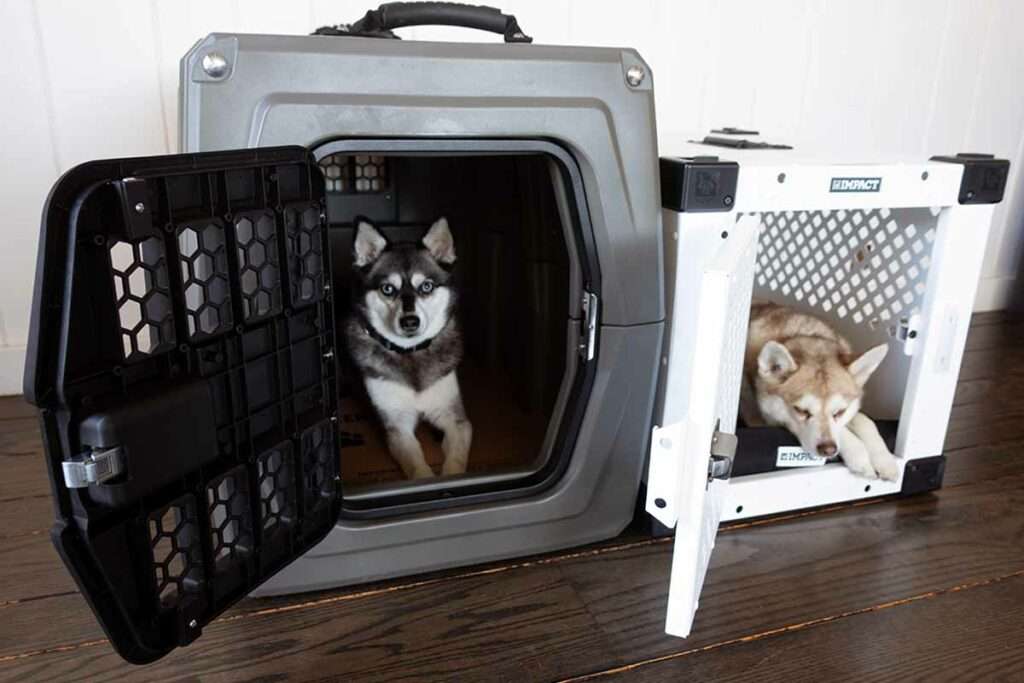
Ultimately, the most important test is whether our dogs actually like the crate.
We observe:
• Whether Copper and Skye enter voluntarily
• How quickly they settle
• Signs of stress or comfort
• Noise when the dog moves inside
A crate that dogs willingly relax in is always a strong positive.
Important Disclaimer
Our dog crate reviews reflect our personal experience testing these products with our own dogs in a home environment.
Every dog is different. Factors like size, temperament, training level, and anxiety can affect how a dog interacts with a crate.
Our reviews should be used as informational guidance, not as a guarantee of performance or safety for every dog.
If your dog is a known escape artist, has severe crate anxiety, or exhibits destructive behavior, we recommend consulting a professional trainer before choosing a crate.
Product Testing Disclosure
Some products featured on Life With Klee Kai are:
• Purchased by us
• Sent to us for testing
• Or researched extensively using verified buyer feedback
Receiving a product does not influence our opinions or review outcomes. We will also disclose if we haven’t tested a crate in person.
Real-World Testing Environment
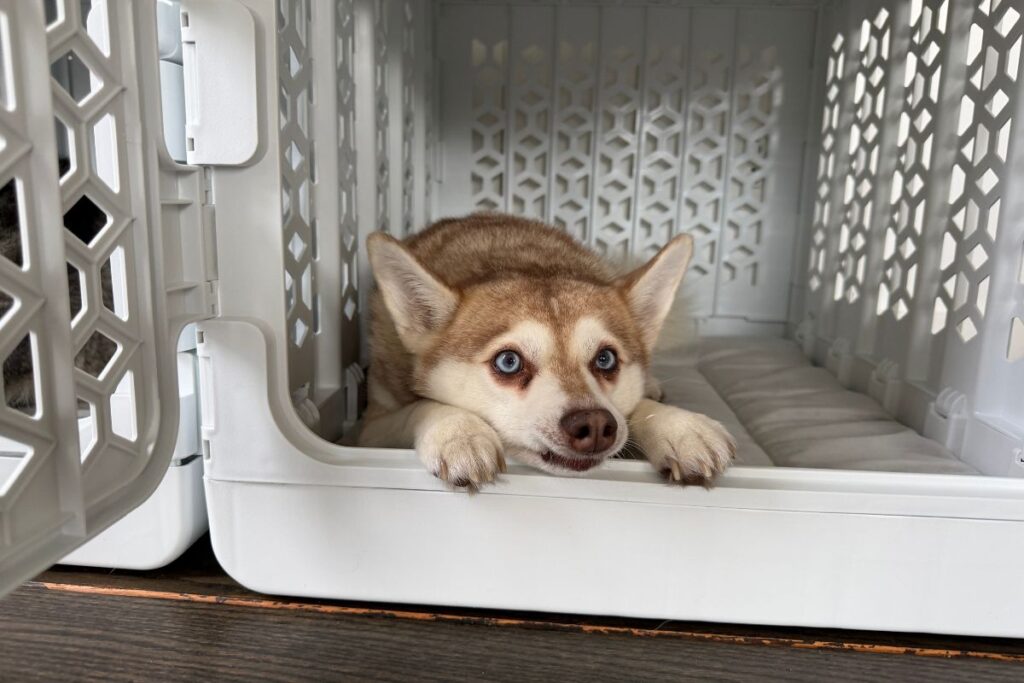
Our crate testing takes place in our home with our two Alaskan Klee Kai or in our Model Y Tesla. This includes:
• Daily crate use
• Short-term confinement periods
• Interaction with bedding and toys
This helps us evaluate how crates perform under realistic conditions.